How Long Do Helium Balloons Last? The Ultimate Guide from Chicago’s BalloonLab
Planning an event in Chicago, whether it’s a vibrant birthday celebration in Lincoln Park or an elegant corporate gala downtown, often involves the joyful addition of balloons. A common question we hear at BalloonLab is, “How long will my helium balloons actually float?” The answer, while seemingly simple, varies significantly based on several crucial factors. Understanding these elements is key to ensuring your decorations remain stunning throughout your entire event and beyond. As Chicago’s local experts in custom balloon arrangements, we are committed to providing durable, show-stopping displays that stand the test of time, making your celebration truly memorable.
KEY TAKEAWAYS:
- Latex balloons typically float for 12-24 hours, but professional Hi-Float treatment can extend this to 3-7 days.
- Foil (Mylar) balloons generally last 3-7 days, with larger ones or proper storage lasting weeks.
- Bubble balloons are the most durable, often floating for 10 days to several weeks.
- Factors like balloon material, size, shape, environmental conditions (especially Chicago’s diverse weather), and inflation techniques critically impact float time.
- Choosing professional-grade balloons and expert services from BalloonLab ensures maximum longevity and visual impact for your event.
Understanding Helium Balloon Lifespan: Latex vs. Foil vs. Bubble
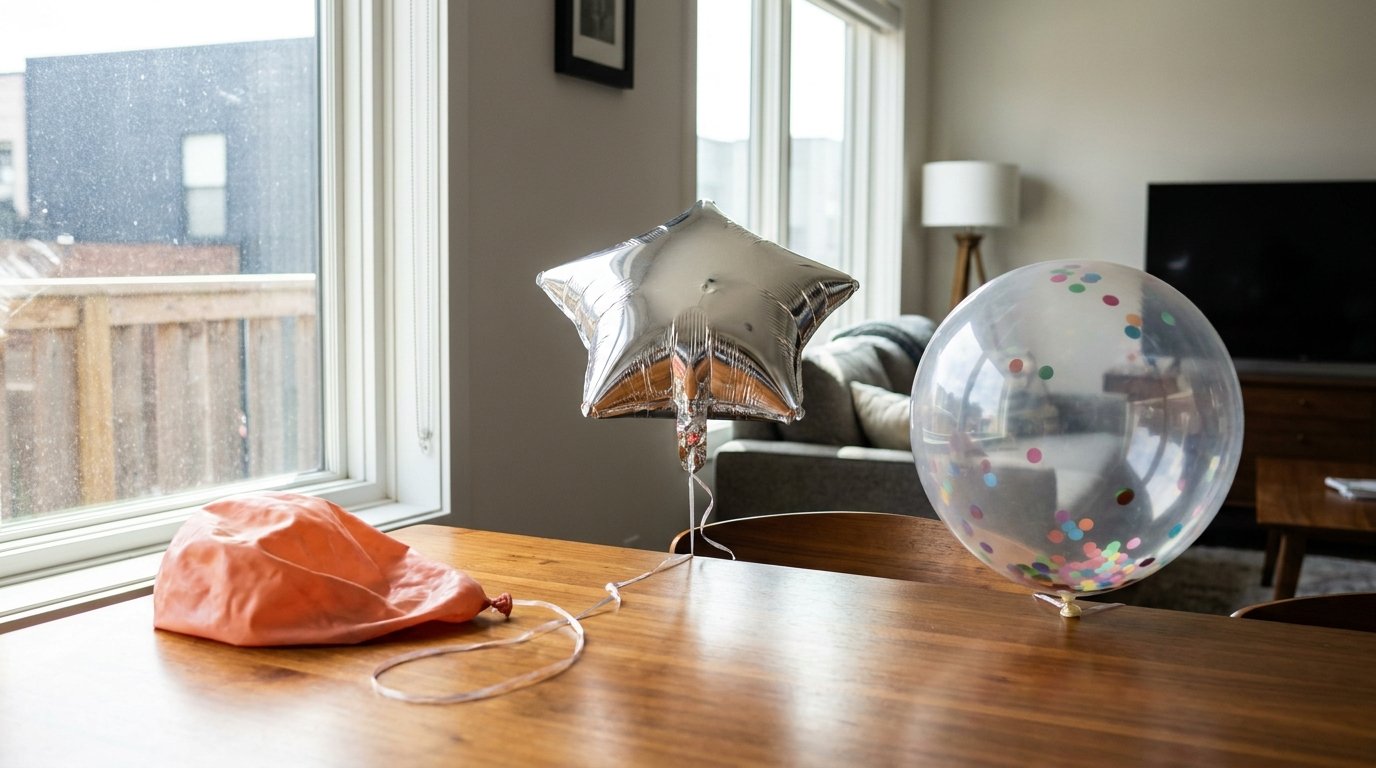
The primary determinant of how long a helium balloon floats comes down to the material it’s made from. Each type has distinct properties that affect its ability to retain helium, directly influencing its longevity.
Latex Balloons: The Versatile Party Staple
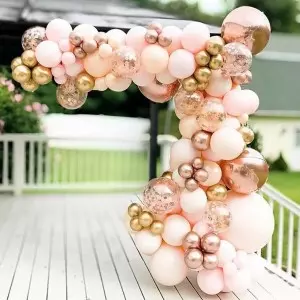
Latex balloons are crafted from natural rubber, a wonderfully versatile material that makes them pliable and vibrant. However, this natural composition means latex is inherently porous at a microscopic level. These tiny pores allow helium atoms, which are incredibly small, to slowly escape over time. For a standard 11-12 inch latex balloon, you can typically expect a float time of 12-24 hours. This makes them perfect for single-day events, immediate impact, or for creating intricate designs like a balloon garland where individual float time is less critical than the overall structure. For a deeper dive into these popular decorations, explore our complete guide on latex balloons.
The game-changing solution for extending the life of latex balloons is Hi-Float. This special non-toxic, water-soluble liquid polymer is applied inside the balloon before inflation, forming a clear, protective coating that seals the pores. Professionally applied Hi-Float can extend the float time of an 11-inch latex balloon significantly, often lasting 3-7 days. This remarkable increase of 300% to 600% compared to untreated balloons makes them suitable for multi-day celebrations or for decor that needs to be prepared in advance.
Foil (Mylar) Balloons: The Dazzling & Long-Lasting Choice
Foil balloons, often referred to as Mylar balloons, are easily recognizable by their metallic sheen and wide array of shapes and designs. Unlike latex, they are made from a non-porous synthetic material, typically a nylon film coated with aluminum. This dense, metallic layering forms a much tighter seal around the helium, drastically reducing its leakage.
Standard 18-20 inch foil balloons generally float for 3-7 days. However, their impressive durability extends even further with larger sizes. Giant foil balloons, such as supershapes or numerical balloons popular for birthdays and anniversaries, can often float for several weeks under ideal conditions. A key feature contributing to their longevity is their self-sealing valve, which automatically closes after inflation, further preventing helium escape.
Bubble Balloons: The Ultra-Durable Innovators
Bubble balloons represent the pinnacle of balloon longevity. These innovative balloons are crafted from a unique, stretchy, non-porous plastic material, often with a crystal-clear finish that allows for creative stuffing or vibrant inner designs. Their robust construction provides an exceptional barrier against helium leakage.
With their superior material, bubble balloons boast an impressive typical float time of 10 days to several weeks. This makes them an excellent investment for displays that need to last a long time, such as ongoing storefront decorations, long-term event signage, or gifts that continue to delight for an extended period.
Quick Reference Table: Helium Balloon Float Times at a Glance
| Balloon Type | Typical Float Time (Standard Size) | With Hi-Float (Latex Only) | Key Characteristics |
|---|---|---|---|
| Latex | 12-24 hours | 3-7 days | Porous, natural rubber, biodegradable. |
| Foil (Mylar) | 3-7 days (up to weeks for large) | N/A | Non-porous, metallic, often self-sealing. |
| Bubble | 10 days – several weeks | N/A | Non-porous, durable plastic, clear finish. |
Key Factors Influencing Your Helium Balloon’s Float Time
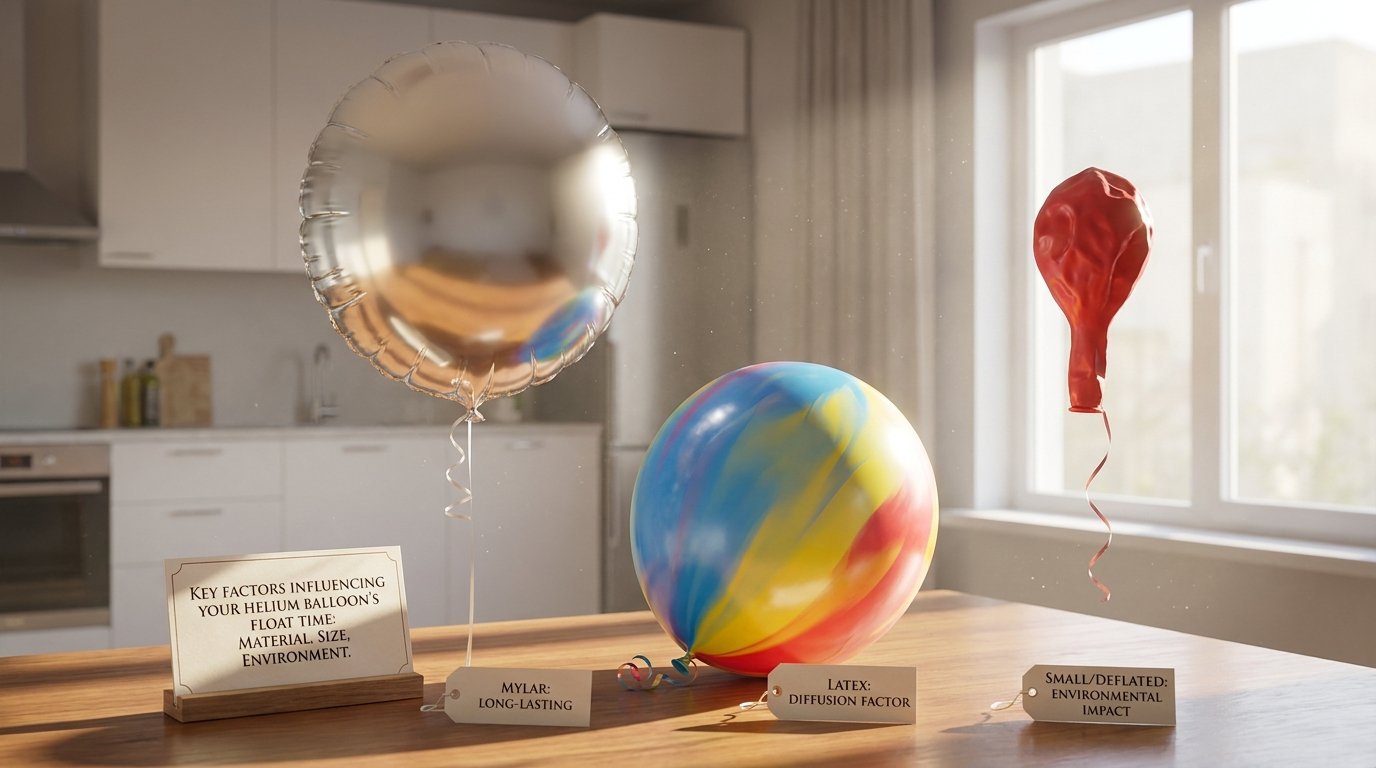
While balloon material is the primary factor, many other elements play a significant role in how long your helium balloons maintain their buoyant beauty. Understanding these nuances helps you make informed decisions for your event decor.
Material & Porosity: The Science Behind the Float
The microscopic pores in latex are the main culprits in helium loss. Helium atoms are incredibly small, making them capable of passing through these tiny gaps at a relatively steady rate. Imagine it like a slow leak from a very fine mesh. In contrast, the dense, multi-layered structure of foil and bubble films creates a much more formidable barrier. These synthetic materials have virtually no pores, effectively trapping the helium inside for much longer durations. BalloonLab’s commitment to sourcing high-quality, professional-grade materials directly impacts this scientific principle, ensuring optimal performance and longevity for all our balloon arrangements.
Balloon Size: Why Bigger Truly is Better (for longevity)
When it comes to float time, size truly matters. Larger balloons contain a greater volume of helium relative to their surface area. This means the overall percentage of helium escaping through the surface area at any given moment is proportionally smaller, taking much longer for the balloon to lose enough lift to fall. For example, a giant 3-foot latex balloon can easily float for 2-3 days (and even longer with Hi-Float), whereas an 11-inch latex balloon might only last 12-24 hours. The added helium volume in a larger balloon provides a significant advantage in sustained buoyancy.
Balloon Shape: Subtle Differences in Design
While not as significant as material or size, a balloon’s shape can subtly influence its float time. Perfectly spherical or teardrop-shaped balloons tend to be the most efficient at retaining helium. More complex shapes, such as starbursts, letters, numbers, or intricate character balloons, often have more seams and angles. Each seam represents a potential microscopic weak point or an area where the material may be slightly stressed, potentially leading to a marginally faster helium escape compared to a perfectly round balloon of the same material and volume. These differences are usually minor but can contribute to overall longevity.
Environmental Conditions: Navigating Chicago’s Climate for Peak Performance
Chicago’s famously dynamic weather plays a critical role in balloon longevity. Balloons are sensitive to their surroundings, and environmental conditions can significantly shorten their float time or even cause them to pop prematurely.
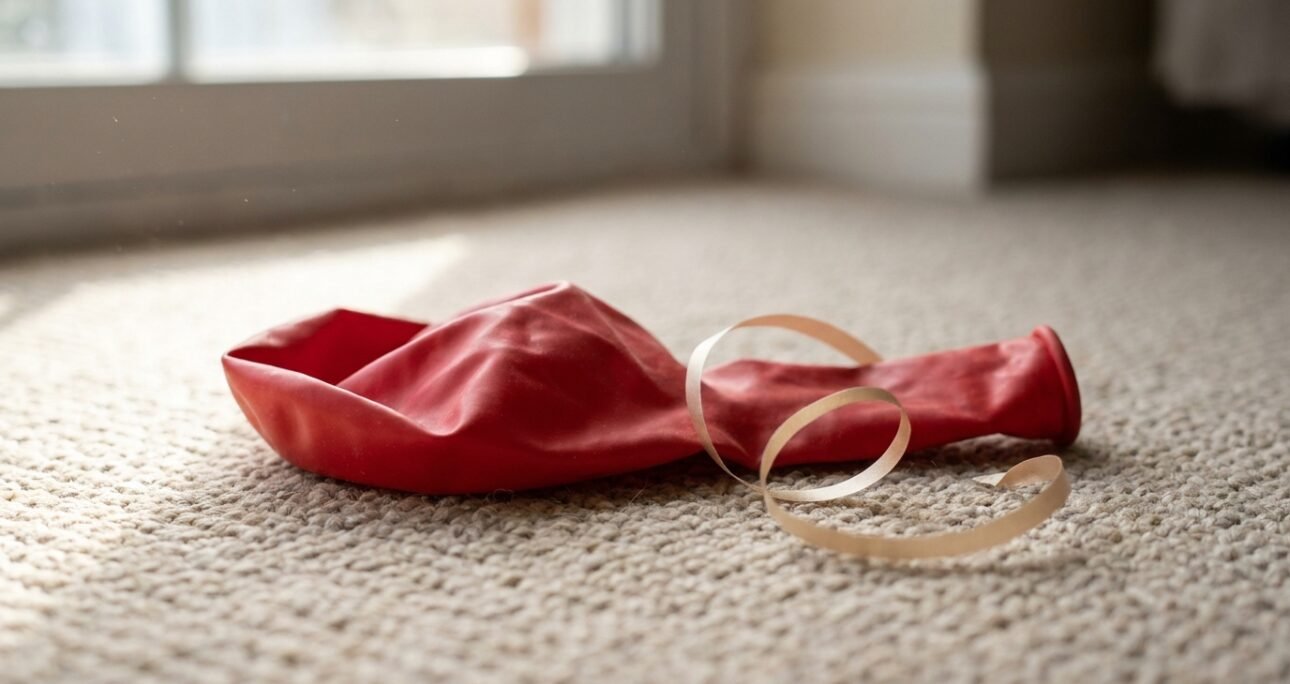
- Temperature: Helium, like all gases, expands when heated and contracts when cooled. In Chicago’s hot summers, placing balloons in direct sunlight or a warm room causes the helium to expand, increasing pressure inside the balloon. This can lead to faster helium escape or, if overfilled, cause the balloon to pop. Conversely, in Chicago’s chilly winters, cold air causes helium to contract, making balloons appear noticeably deflated or saggy. While they will regain some lift if brought back into a warmer environment, extreme temperature fluctuations can still impact the balloon’s integrity. For a detailed look at how heat affects balloons, refer to our article on why balloons pop in the heat.
- Humidity: High humidity, often experienced in Chicago during summer, can subtly affect latex balloons over extended periods. While not an immediate threat, sustained exposure to damp conditions can weaken the latex material, making it more pliable and potentially increasing the rate of helium diffusion.
- Direct Sunlight & UV Exposure: Direct sunlight and ultraviolet (UV) rays are particularly harsh on balloons. UV light rapidly degrades latex, causing it to oxidize and break down, leading to a dull, matte appearance and significantly accelerating helium loss. Darker colored balloons also absorb more heat, which can lead to faster helium escape or premature popping. Foil balloons are more resistant to UV degradation but can still heat up rapidly in direct sunlight, causing helium expansion and potential popping. According to materials science principles, natural latex can begin to noticeably degrade from UV exposure within just a few hours outdoors, whereas foil balloons maintain their integrity much longer.
Quality of Helium & Inflation Techniques
The purity of the helium used is paramount. To achieve maximum lift and float time, balloons should be filled with 100% helium. Using helium mixed with air, a common practice for some less reputable suppliers to cut costs, will significantly reduce float time because air is heavier than helium and lacks its lifting properties. Moreover, improper inflation techniques can severely compromise longevity. Under-inflating a balloon means it won’t have enough helium to float optimally or may appear saggy, while over-inflating stresses the material, making it more prone to popping or faster helium loss due to increased internal pressure. BalloonLab uses only pure, high-grade helium and employs precise inflation techniques to ensure every balloon performs at its best.
Professional Treatment: The Hi-Float Advantage
We’ve touched on Hi-Float, but its impact is worth reiterating. This clear, non-toxic liquid creates an internal coating within latex balloons. As the liquid dries, it forms a barrier that dramatically slows the rate at which helium can escape through the latex pores. The key to its effectiveness, however, lies in correct application. Too much or too little Hi-Float, or uneven distribution, can diminish its benefits. Professional technicians at BalloonLab are skilled in applying Hi-Float precisely, ensuring every latex balloon receives the optimal treatment for extended float times.
Maximizing Your Balloon’s Lifespan: Expert Tips from BalloonLab Chicago
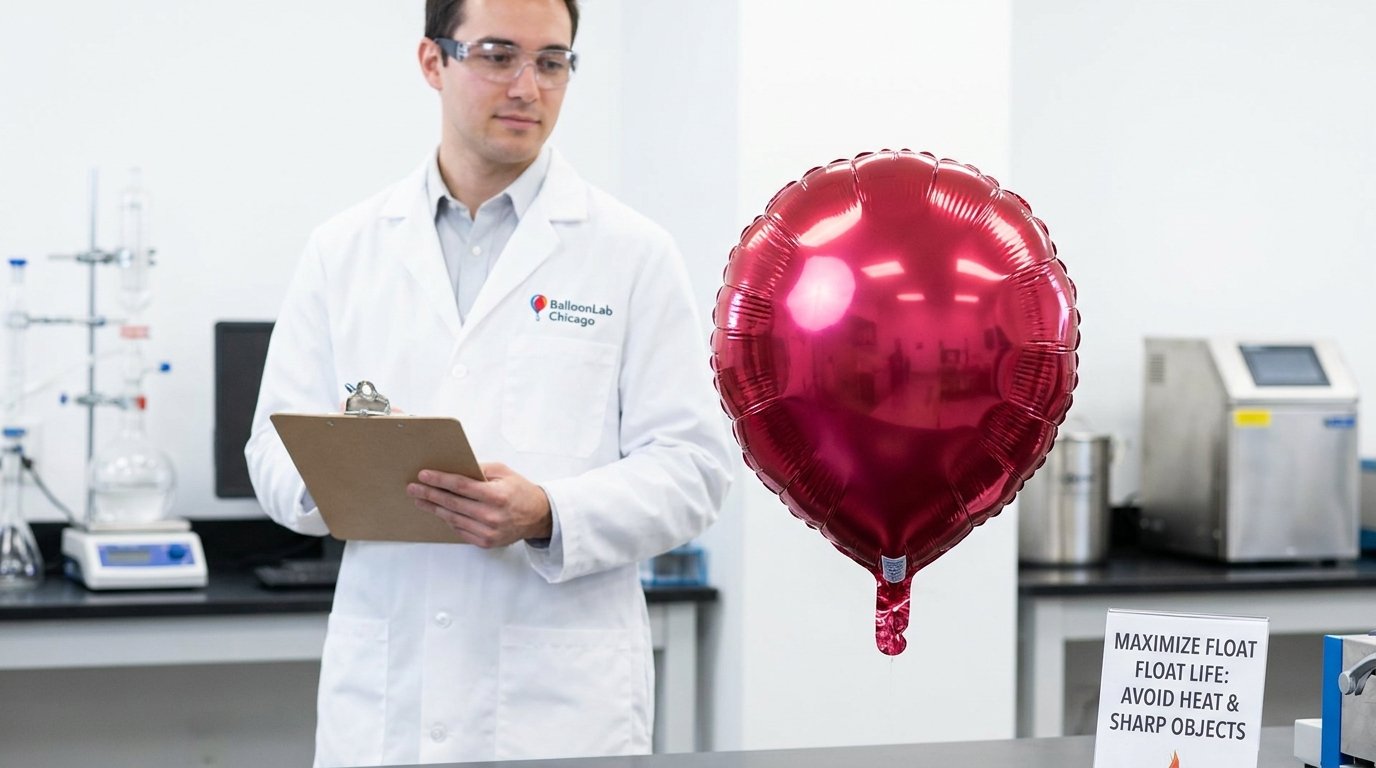
Extending the life of your helium balloons isn’t just about choosing the right material; it also involves thoughtful planning and proper care. Here are some expert tips from BalloonLab to ensure your balloon decorations last as long as possible for your Chicago event.
- Choose the Right Balloon Type for Your Event’s Duration: This is the first and most critical step. If you’re hosting a multi-day convention at McCormick Place or an extended wedding celebration, foil or bubble balloons are your best bet. For a vibrant birthday balloon bouquet for a single evening, Hi-Floated latex balloons offer excellent value and impressive float time. Always consider how long you need your decor to look fresh and full. Our comprehensive guide on how to choose the right type of balloons for your event provides even more detail.
- Prioritize Professional-Grade Balloons: While DIY kits might seem appealing for cost savings, investing in high-quality balloons from a reputable supplier like BalloonLab is crucial for longevity and overall aesthetic impact. Cheap, thin balloons are a false economy; they often use lower-grade latex or foil, leading to faster helium loss and a disappointing display. According to a 2023 industry report by Eventbrite, 78% of event planners rank “long-lasting and impactful decor” as a top three priority for guest experience, emphasizing the need for reliable balloon longevity that only professional-grade products can guarantee.
- Strategic Placement: Keep Them Indoors & Away from Extremes: For optimal longevity, keep your balloons indoors in a climate-controlled environment. Position them away from direct sunlight, heating or air conditioning vents, open windows or doors (which cause drafts and temperature fluctuations), and any sharp objects. For outdoor events in Chicago’s often unpredictable weather, consider sheltered areas or choose air-filled decor such, as a balloon arch, for longer durability, reserving helium balloons for more protected spaces.
- The Magic of Professional Hi-Float Application: For latex balloons, Hi-Float is your secret weapon. But its effectiveness is entirely dependent on proper, even application. BalloonLab technicians are trained to apply Hi-Float correctly, creating that crucial internal barrier that significantly slows helium escape and extends float time without compromising the balloon’s appearance.
- Proper Storage & Handling Before and During Your Event: Treat your balloons gently! Avoid crushing them, especially during transport. Rough handling can stress the material, create micro-tears, or even break the internal Hi-Float barrier, all of which will shorten float time. When transporting, ensure they have ample space and are not pressed against sharp surfaces or exposed to extreme temperatures.
Why Choose BalloonLab for Long-Lasting Balloons in Chicago?
At BalloonLab, we believe your event decor should be as enduring as the memories you create. Our dedication to quality and service sets us apart as Chicago’s premier choice for balloon arrangements that not only look spectacular but also last.
Our Commitment to Quality & Longevity
We meticulously source only premium materials for all our balloon creations, ensuring that every latex, foil, and bubble balloon meets the highest standards for durability and visual appeal. We use 100% pure helium, free from air mixes, which is critical for maximum lift and float time. Our expert inflation techniques and precise Hi-Float application further guarantee the longest possible float times for your arrangements. We understand Chicago’s unique climate – from the humid summers to the biting winters – and meticulously plan our designs to withstand local conditions, providing you with peace of mind.
Tailored Solutions for Every Occasion
Whether you are planning an intimate gathering or a grand celebration, BalloonLab offers personalized consultations to understand your event’s duration, theme, and budget. We guide you in choosing the perfect balloon types and treatments, such as Hi-Float for latex or selecting durable bubble balloons, ensuring your decor perfectly aligns with your vision and lasts exactly as long as you need it to. From a whimsical balloon bouquet for a loved one to elaborate corporate event balloons, we tailor every detail.
Seamless Service & Stunning, Durable Results
From the moment you contact us to the flawless installation at your Chicago venue, we provide a seamless, stress-free experience. Our goal is to ensure your balloon decor not only looks breathtaking upon arrival but continues to impress throughout your entire celebration. When it comes to planning a birthday party, a grand opening, or any special occasion, you can trust BalloonLab to deliver stunning, durable results that elevate your event.
Contact BalloonLab today to discuss your next event and experience the difference that professional quality, expertise, and a commitment to longevity make for your balloon decorations in Chicago.
Frequently Asked Questions (FAQ)
How long do air-filled balloons last compared to helium-filled?
Air-filled balloons typically last much longer than helium-filled ones. Air-filled latex balloons can retain their form for 1-2 weeks, while air-filled foil or bubble balloons can last for weeks to several months. This extended lifespan is because air molecules are larger than helium and escape slower, plus there’s no lifting requirement, so the balloon maintains its shape even with minimal air loss.
Can I re-inflate helium balloons?
Foil and Bubble balloons often feature self-sealing valves, making them suitable for re-inflation if they still appear in good condition. Latex balloons, however, rarely look as good upon re-inflation once they have significantly deflated due to the stretching and weakening of the material’s structure. It’s generally recommended to replace deflated latex balloons for the best aesthetic result.
Does balloon color affect how long it lasts?
The color of a balloon does not directly affect its inherent float time. However, darker-colored balloons absorb more heat when exposed to direct sunlight, which can indirectly speed up helium expansion and escape or increase the risk of popping. For outdoor events in sunny conditions, choosing lighter-colored balloons might offer a slight advantage in preventing premature deflation due from heat.
Is it cheaper to fill balloons myself?
For a very small number of balloons, purchasing a disposable helium tank might seem convenient, but it is often more expensive per balloon compared to professional services. For larger quantities of balloons, while renting a commercial helium tank can be more cost-effective, it requires expertise for optimal inflation, safe handling, and proper Hi-Float application – all of which BalloonLab provides with guaranteed quality and without the hassle.